Hurricane Food List: A 3-Day and 2-Week Supply on a Budget
A hurricane food list for 3 days and 2 weeks: shelf-stable foods, water, no-power cooking and fridge rules from Ready.gov, USDA and the Red Cross.
Part of the complete guide
Emergency Food Assistance →
Quick answer: A hurricane food list is a stock of shelf-stable food you can eat with no power, no refrigeration and little or no water. Ready.gov says to store at least a several-day supply.1 The American Red Cross sets it at 3 days of food for an evacuation kit and 2 weeks for home, plus one gallon of water per person per day.2 Core foods are canned meat or fish, peanut butter, crackers, canned fruit and vegetables, cereal and shelf-stable milk, plus a manual can opener.3
If cash is tight, buy it over four trips instead of one. For food help before or after a storm, see our emergency food assistance guide.
What are the best foods to bring or stock up on for a hurricane?
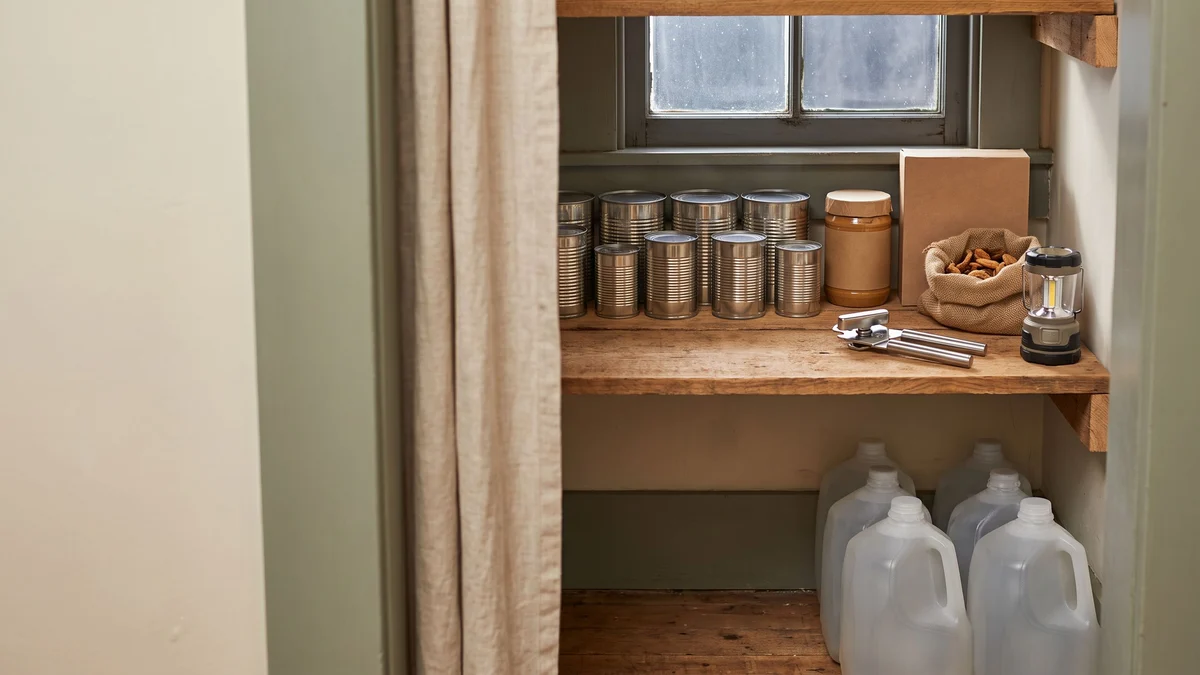
A good hurricane food list uses foods that need no refrigeration, no cooking and little or no water, and that your household already eats.1 LSU AgCenter's dietitian groups the best choices by food group.3
| Food group | No-cook picks | Notes |
|---|---|---|
| Protein | Canned chicken, tuna, salmon or sardines; canned chili; peanut butter; nuts; protein bars | Choose pop-top cans if you have no hand can opener4 |
| Grains | Whole-wheat crackers, dry cereal, granola bars, pretzels, rice cakes | Skip combo packs that need a fridge5 |
| Fruit | Canned fruit, dried fruit, 100% juice in single-serve containers | Buy sizes you can finish in one meal5 |
| Vegetables | Canned vegetables, low-sodium soup, 100% vegetable juice | Canned food can be eaten cold1 |
| Dairy | Shelf-stable milk or soy or almond milk, boxed processed cheese | Powdered milk needs extra water5 |
| Comfort foods | Hard candy, cookies, instant coffee, tea bags, sugar, salt, pepper | Small treats help in a long outage5 |
Rice and dried pasta keep well, but they need water and heat. Count them only if you have a grill or camp stove to use outdoors.5 For how long each food keeps and which cans to donate, see our non-perishable food list.
What does a 3-day hurricane food supply look like?
LSU AgCenter says to have at least a three-day supply for each person in the household, and to check your cupboard and its dates before you shop.3 These sources name foods rather than set amounts, so the quantities below are our planning example for one person: 3 days of 3 meals and 2 snacks.
| Meal | Per person, 3 days | Examples |
|---|---|---|
| Breakfast (3) | 1 box of cereal or granola, 3 single-serve milk boxes, 1 small bag of dried fruit | Cereal with shelf-stable milk, raisins |
| Lunch (3) | 1 jar of peanut butter, 1 box of crackers or a loaf of bread, 1 small jar of jelly | Peanut butter on crackers, fruit cup |
| Dinner (3) | 3 pull-top cans of meat, fish, chili or beans, plus 3 cans of vegetables | Chili with canned corn, tuna with crackers |
| Snacks (6) | 6 granola bars or bags of trail mix, nuts or pretzels | Eat between meals or during the storm |
| Drinks | 3 gallons of water, plus juice boxes if you like | See water below |
Source: food choices from LSU AgCenter and UGA Extension; amounts are ours.35 Add a manual can opener, disposable plates, cups and utensils, and a zip-top bag for each day's food. Store the supply on a high shelf, because flood water can contaminate low shelves.4
How much water do you need?
Store at least one gallon of water per person per day for several days, for drinking and sanitation.6 The Red Cross turns that into 3 days for an evacuation kit and 2 weeks for home.2 For a family of four, 2 weeks is 56 gallons.
- Children, nursing mothers and sick people may need more, and in very hot weather water needs can double.6
- Keep store-bought water sealed in its original container in a cool, dark place. Water you bottle yourself should be replaced every six months.6
- If your tap water is unsafe, boil it for one full minute, or add 1/8 teaspoon of regular liquid household bleach (no scent or added cleaners) per gallon, stir and wait 30 minutes.6
Water is bulky, so add a few gallons on every shopping trip instead of waiting for a storm watch.
How do you build a 2-week emergency food supply?
You may already own most of it. UGA Extension suggests increasing the staples you normally keep, then writing a plan.5
- List who you feed. Note allergies, diabetes and other special needs by name.7
- Inventory your shelves and freezer. Write down the amount and the use-by date of each food.5
- Plan 14 days of meals. Label them Day 1 to Day 14, and note the water and equipment each one needs. Put mix ratios for rice, instant cereal and dry milk on an index card in a sealed bag.5
- Aim for one balanced meal a day. After three days, nutrition matters more than it does for a short outage.5
- Buy what is missing, then keep it fresh. Rotate staples once or twice a year and check cans for rust, leaks, bulges and dents.5 Our guide to how long canned food lasts has the timelines.
University of Minnesota Extension publishes a free 14-day menu and shopping list for two people. It leans on canned food and says buying two weeks of food "can be a financial stretch." For four people, it says to double the canned fruit and scale perishables to what you normally use.7 Some of its meals need a stove, so lean on the no-cook foods first.
How can you build a hurricane grocery list on a tight budget?
Start with what you have, then buy in four trips, one per paycheck. Use this as your hurricane shopping list. The trip order is our plan; the sources do not set one.
| Trip | Buy | Why first |
|---|---|---|
| 1 | Water, a manual can opener, peanut butter, crackers | Covers drinking and a basic meal |
| 2 | Canned fish or chicken, chili, beans | Adds protein that needs no cooking |
| 3 | Canned fruit and vegetables, cereal, shelf-stable milk | Rounds out the 3-day plan |
| 4 | Rice, pasta, dried fruit, snacks, fuel for an outdoor stove | Stretches toward 2 weeks |
Source: PantryPath plan using foods from Ready.gov and UGA Extension.15
- Buy what you already eat. Ready.gov says to choose foods your family will eat.1 They also work as everyday meals, so nothing goes to waste.
- Skip the big cans. UGA warns that large or institutional sizes waste money if you can't refrigerate the leftovers.5
- Compare unit prices. We did not collect store prices for this post, because they vary by store and week.
Pantries can cover part of the list. On Oct. 30, 2026, PantryPath's directory held 1,312 confirmed listings in Florida, Texas, Louisiana, Mississippi, Alabama, Georgia, South Carolina and North Carolina. Of the 890 that report what they give out, 505 list canned goods and 458 list dry goods and grains.8
Browse food pantries with canned goods or search by city, and call first to confirm hours and stock. If you get SNAP, see our budget grocery list for low-cost staples, and disaster SNAP for help after a declared disaster.
What do you eat first when the power goes out?
Eat the refrigerator food first, then the freezer food, and save the shelf-stable food for last.5 Keep the doors shut as much as you can.1
| Situation | What to know |
|---|---|
| Closed refrigerator | Keeps food safely cold about 4 hours9 |
| Full freezer, door closed | Holds its temperature about 48 hours (24 hours if half full)9 |
| Perishable food above 40°F for 2 hours or more | Throw it out1 |
| Frozen food with ice crystals | Can be refrozen or eaten9 |
| 25 pounds of dry ice | Keeps a 10-cubic-foot freezer below freezing for 3 to 4 days; wear heavy gloves and keep it off food1 |
Before the storm, put a thermometer in the fridge and freezer, freeze jugs of water, and group frozen food together.9 After 4 hours without power, USDA says to discard refrigerated meat, poultry, fish, soft cheeses, milk, eggs, leftovers and deli items.9 Peanut butter, hard cheeses, bread and whole fresh fruit are still safe after hours above 40°F.9 Never taste food to test it, and when in doubt, throw it out.9
How do you cook without power?
You may not need to. Commercially canned food can be eaten from the can without warming.1 To heat a can, remove the label, wash and disinfect the can, and open it before heating.1 Charcoal grills and camp stoves are for outdoor use only.1
What about babies, pets and special diets?
- Infants: Use ready-to-feed formula. If you must mix powder, use bottled water, or boiled water as a last resort.1 The Red Cross adds bottles, baby food and diapers to the kit.2 See how to get free baby formula if you need help.
- Pets: The Red Cross lists pet food, a bowl, a collar, a leash and a carrier.2 Our guide to pet food assistance covers low-cost options.
- Medical needs: Keep a 7-day supply of medications and extra cash on hand.2 UGA notes that foods for older adults and for people with diabetes or allergies belong in the kit.5
What should you do if your food gets wet?
Do not eat any food that touched flood water.9 Throw out food in containers that are not waterproof, such as screw-cap, snap-lid, pull-top and crimped-cap containers, and cardboard boxes.9 Discard cans that are swollen, leaking, punctured, deeply rusted or dented too badly to open with a manual can opener.9
You can save undamaged all-metal cans. Remove removable labels, wash the cans with soap, rinse them, then boil them for 2 minutes or soak them for 15 minutes in 1 tablespoon of unscented bleach per gallon of water. Air-dry them for at least an hour before you open them, and mark the contents with a marker.9
Frequently Asked Questions
What are the 10 items in a hurricane emergency kit?
The first 10 on the Red Cross list are:
- Water
- Non-perishable, easy-to-prepare food
- A flashlight
- A battery-powered or hand-crank radio
- Extra batteries
- A first aid kit
- A 7-day supply of medications
- A multi-purpose tool
- Sanitation and hygiene items
- Copies of personal documents
Source: American Red Cross.2
How much food does a family of five need?
Plan for each person separately. LSU AgCenter recommends at least a three-day food supply for each person.3 Multiply the per-person table above by five. For water, one gallon per person per day comes to 15 gallons for three days.2
Do I need a freeze-dried emergency food kit?
No. UGA says dehydrated and freeze-dried foods are light and compact, but you must plan extra water to rehydrate them.5 Ordinary canned and boxed foods pass Ready.gov's test: no refrigeration, cooking, water or special preparation.1
When is hurricane season?
The Atlantic hurricane season runs from June 1 to November 30, and tropical storms sometimes form before and after those dates.10
How we checked this
On Oct. 30, 2026, we read Ready.gov's food and water pages, the American Red Cross kit list, USDA's storm food safety guide and NOAA's tropical cyclone climatology page. We also read guides from LSU AgCenter, UGA Extension, University of Minnesota Extension and UF/IFAS Extension.1629103574 USDA's guide was last updated in 2020. Its fridge and freezer times match UF/IFAS Extension's 2025 summary of them. The same day, we queried PantryPath's directory for confirmed listings in eight Gulf and Atlantic coast states.8
We did not test foods, collect store prices or interview emergency managers. The quantities in the 3-day table and the four-trip plan are our examples, not federal figures. For storm alerts and evacuation orders, follow your local emergency management office.
Next step: if you are short on food before or after a storm, start with the emergency food assistance guide, or find a pantry through our pantry search.
Sources
- Food · Ready.gov (2026)
- Survival Kit Supplies · American Red Cross
- Disaster Information Resources: Three-Day Emergency Food Supply · LSU AgCenter (2024)
- Hurricane Preparedness: Key Foods to Keep in Stock · UF/IFAS Extension Orange County (2025)
- Preparing an Emergency Food Supply, Short Term Food Storage · University of Georgia Extension (2020)
- Water · Ready.gov (2021)
- Preparing a 2-week emergency food supply · University of Minnesota Extension (2026)
- PantryPath directory analysis (n=1,312, queried 2026-10-30) · PantryPath (2026)
- A Consumer's Guide to Food Safety: Severe Storms and Hurricanes · USDA Food Safety and Inspection Service (2020)
- Tropical Cyclone Climatology · NOAA
Find a Food Pantry Near You
Search our directory of 7,000+ verified food pantries and food banks across the United States.